
Introduction
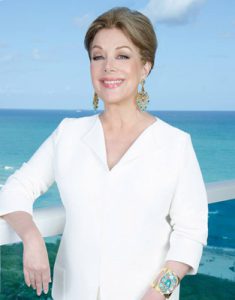 Virginia Vallejo García is a Colombian journalist and author who has been granted political asylum in the United States since 2010. She is known for her career in the media, her denunciations of corruption within the political class, and her book “Loving Pablo, Hating Escobar,” in which she describes her five-year romantic relationship (1983-1987) with Pablo Escobar Gaviria and the Medellín cartel leader’s connections to presidents Alfonso López Michelsen, Ernesto Samper, Álvaro Uribe, and the family of Juan Manuel Santos. She also details the relationships between the drug cartels and rebel groups and paramilitary squads, and the role of the armed forces and the owners of major media outlets in corrupt practices.
Family and early years
 Virginia Vallejo García is the daughter of Juan Vallejo Jaramillo, an industrialist, and Mary Garcia Rivera. Her grandfather was the Minister of Finance Eduardo Vallejo Varela, a descendant of the family of General Mariano Guadalupe Vallejo, a Mexican landowner and politician, and leader of the Californios. Her grandmother, Sofía Jaramillo Arango, was a descendant of Alonso Jaramillo de Andrade Céspedes, a nobleman from Extremadura whose lineage traces back to Emperor Charlemagne, through several European royal families. After the horrors of “El Bogotazo” on April 9, 1948—a civil war that followed the assassination of the socialist leader Jorge Eliécer Gaitán—her parents, recently married, remained living at “Morelia,” the family estate near Cartago, in the Department of Valle del Cauca. Their first child, Virginia Vallejo García, was born there on August 26, 1949. A year later, the family returned to Bogotá, where her three siblings were born: Felipe (1951), Antonio (1955-2012), and Sofía (1957).
He first studied at the kindergarten run by Elvira Lleras Restrepo, sister of President Carlos Lleras, a friend of his family; and then at the Anglo-Colombian School, founded by his great-uncle Jaime Jaramillo Arango, who served as Minister of Education and Colombian ambassador to London during World War II.
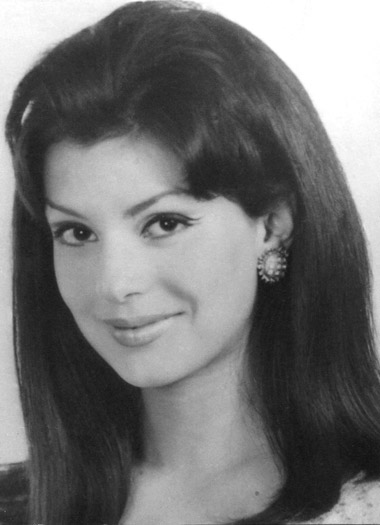 After graduating from high school in 1967, she worked as an English teacher at the Colombo-American Center in Bogotá and at the headquarters of the Banco del Comercio. There she met Fernando Borrero Caicedo, founder of the firm Borrero, Zamorano & Giovanelli and the bank’s architect, a widower 25 years older than Virginia, exceptionally handsome and very much resembling the actor Omar Sharif. In 1969, they were married in a civil ceremony—not in a Catholic church—to the scandal of her family and Cali’s high society. After their divorce in 1971, she became the public relations director of Cervecería Andina; and in 1972, she received her first offer to work in television, which she reluctantly accepted due to the opposition of her family and friends.
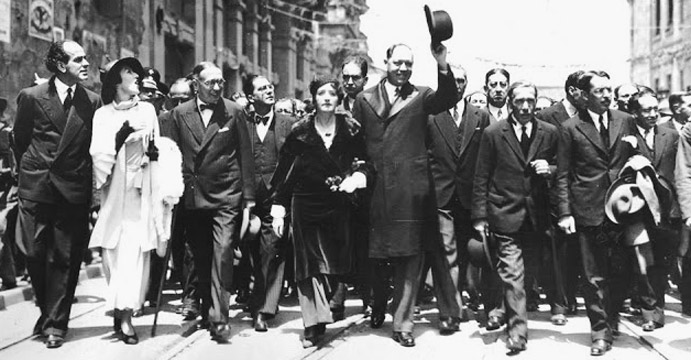
August 5, 1934
From left to right: my great-uncle, Jaime Jaramillo Arango (Minister of Education), María Olaya Londoño, President Alfonso López (1934-1938), María Teresa Londoño (First Lady), President Enrique Olaya Herrera (1930-1934), Esteban Jaramillo (Minister of Finance), and President Eduardo Santos (1938-1942)
Career in the media
1972-1973: Makes her television debut on the program ¡Oiga Colombia!, Saturday Magazine, 7:00-8:00 PM. Directors: Carlos Lemos Simmonds and Aníbal Fernández de Soto. (The former would become Foreign Minister of Colombia, and the latter Mayor of Bogotá.)
1973-1974: Reporter for TV Sucesos-A3, Monday to Friday, 11:00 PM-12:00 AM. Director: Alberto Acosta Penagos.
1973-1975: Hosts Éxitos 73, Éxitos 74, and Éxitos 75, a music program on THOY Televisión, Saturdays 8:00-9:00 PM. Director: Eucario Bermúdez.
1974: Hosts a children’s program, 4:00-5:00 PM.
1974-1975: Reporter and film critic for ¡Oiga Colombia!, Saturday Magazine. Directors: Alberto Acosta Penagos and Mario Franco Ruiz.
1975: Hosts the game show TV Crucigrama, 6:00-7:00 PM.
1975: Films a television commercial with Roberto Gómez Bolaños, El Chapulín Colorado, at Televisa studios. Directed by Juan David Botero and Armando Plata, Atlas Publicidad.
1975-1977: International Editor for TV Sucesos-A3, Monday to Friday, 12:00-1:00 PM. Director: Alberto Acosta Penagos.
1976: Hosts Cocine de Primera con Segundo, with cordon bleu chef Segundo Cabezas, Saturdays 3:00-4:00 PM.
1978: Elected to the board of directors of the Colombian Association of Announcers, ACL.
1978: Invited by the Taiwanese government to the inauguration of President Chiang Ching-kuo, son of General and statesman Chiang Kai-shek. 1978: Co-stars in the film Colombia Connection by Gustavo Nieto Roa.
1978-1980: Hosts the television news program 24 Horas, Monday through Friday, 7:00-8:00 PM. Directors: Ernesto Rodríguez, Mauricio Gómez, and Sergio Arboleda.
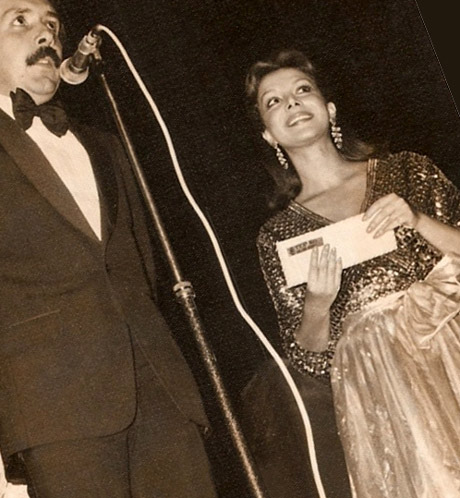
1979: Wins the award for Best Television News Presenter from the Association of Entertainment Journalists (APE).
1979: Appears opening the “The Beautiful Women of El Dorado” section in the November issue of the American magazine Town & Country.
1979-1980: Hosts ¡Cuidado con las Mujeres! (Beware of Women!) on RTI Televisión. Director: David Stivel.
1979-1985: Covers the Miss Colombia National Beauty Pageant for various media outlets.
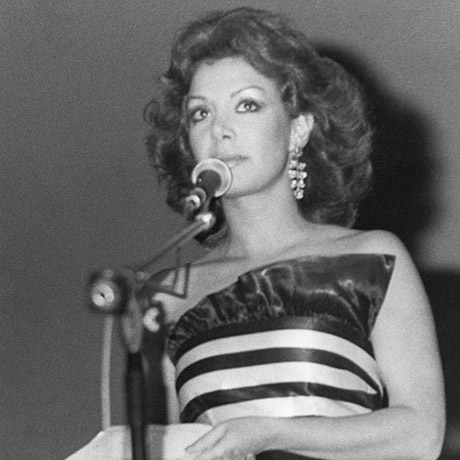
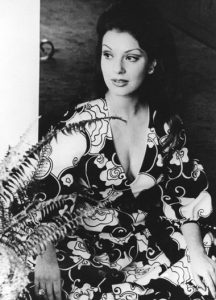
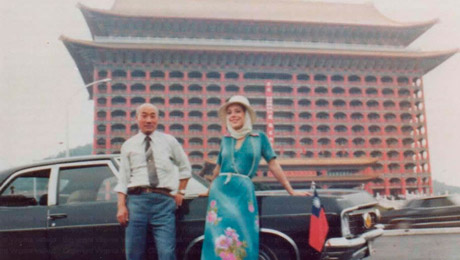
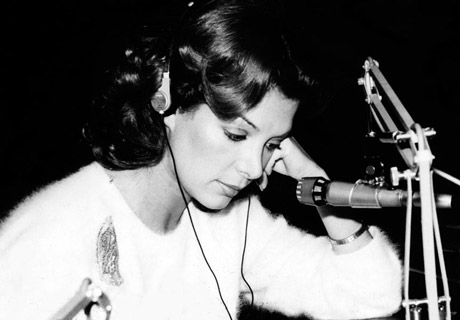
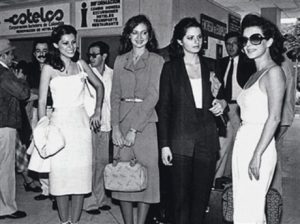
1980: Wins, for the second time, the award for Best Television News Presenter from the Association of Entertainment Journalists.
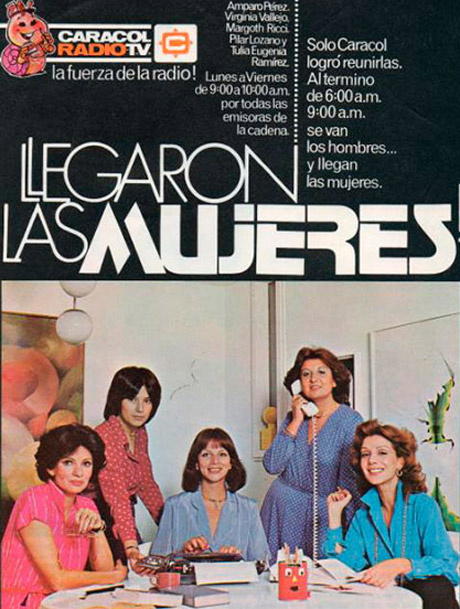
1980-1982: Hosts ¡Llegaron las Mujeres! (The Women Have Arrived!) on Caracol Radio, 9:00 AM – 12:00 PM, with Amparo Pérez, Margot Ricci, Pilar Lozano, and Tulia Eugenia Ramírez.
1981: Founds the production company TV Impacto with journalist Margot Ricci, wife of Juan Gossaín, the director of RCN Radio from 1983 to 2010.
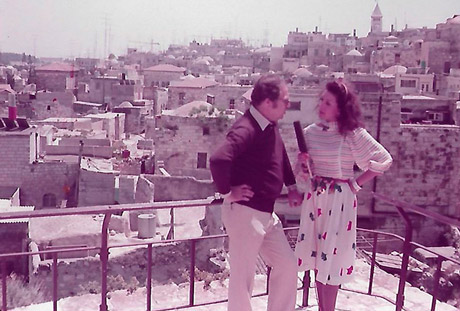
1981: Invited by the Israeli government to produce specials on the Holy Land and Masada.
1981: The only Colombian journalist sent by a Colombian media outlet to cover the wedding of the Prince and Princess of Wales, an event she broadcast for Caracol Radio for six consecutive hours. Immediately afterwards, she received offers from the BBC and the British Crown Information Centre.
1982-1983: Directs and presents ¡Al Ataque! (On the Attack!) on TV Impacto, Mondays 6:00-7:00 PM. The first female journalist to cover a bullfight from the bullring’s alley, much to the scandal of her male colleagues and the bullfighting fans.
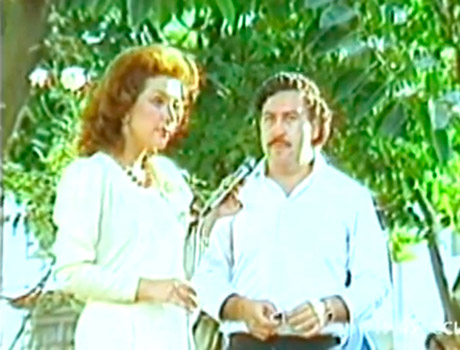
1983: The first journalist to interview Pablo Escobar Gaviria, head of the Medellín cartel, for a national media outlet on her program ¡Al Ataque! Director: Virginia Vallejo.
1982-1984: Presents Hoy por Hoy, Magazín del Lunes (Today, Monday Magazine) on Globo Televisión, Mondays 8:00-9:00 PM. Director: Fernando Buitrago.
1983-1984: Presents El Show de las Estrellas (The Stars’ Show), Saturdays 8:00-9:00 PM. Director: Jorge Barón.
1984: International editor for Grupo Radial Colombiano. Director: Carlos Lemos Simmonds.
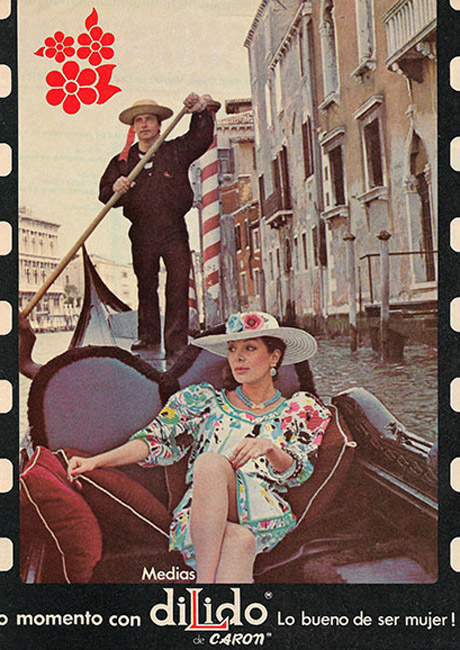
1984-1987: Image and spokesperson for Medias Di Lido, for whom she filmed television commercials in Venice, Rio de Janeiro, San Juan, Puerto Rico, and Cartagena. Director: Carlos Galkiewicz of Alas Publicidad.
1985: Hosts the Telediario news program, Monday to Friday, 12:00-1:00 PM. Director: Arturo Abella.
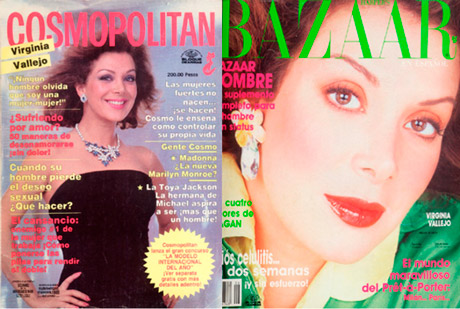
1985: First Colombian personality to grace the covers of Bazaar and Cosmopolitan magazines.
1985: Receives an offer to become the news anchor for Channel 51 in Miami, Florida, which she declines.
1986: Retires from television and settles in the Rosario Islands, Cartagena, Colombia. Between 1974 and 1987, Virginia Vallejo received seventeen nominations for Best Television Presenter in news, music, and other fields.
1988: Travels to Europe on a German government scholarship to study economic journalism in Berlin at the Internationales Institut für Journalismus.
1991: Upon her return from Germany to Colombia, she co-stars in the telenovela Sombra de tu sombra (Shadow of Your Shadow) on Caracol Televisión, Monday to Friday, 8:00-9:00 PM.
1992: Hosts the interview series Indiscretísimo (Very Indiscreet) with Colombian personalities. Director: Manuel Prado.
1991-1993: Directs and hosts the radio program Picantísimo (Very Spicy) on the Todelar network, Monday to Friday, 3:00-6:00 PM.
1991-1994: International editor of the Todelar News program, Monday to Friday, 6:00-8:00 PM. Directors: Juan Álvaro Castellanos (1991), Javier Ayala (1992), and Gabriel Ortiz (1993).
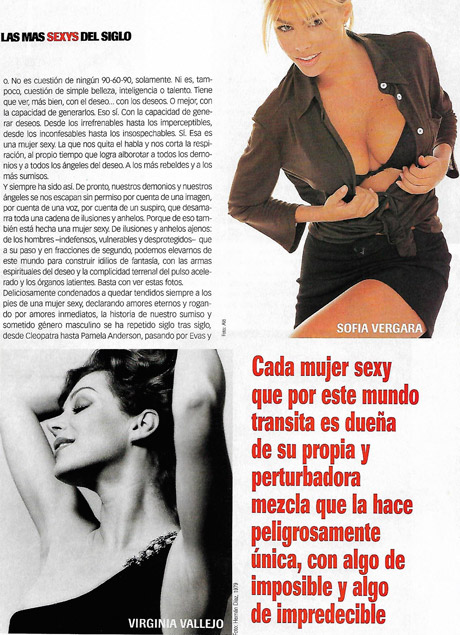
1999: In its millennium edition, Hombre magazine selects her as “One of the 10 sexiest Colombian women of the 20th century.”
Career in multi-level marketing
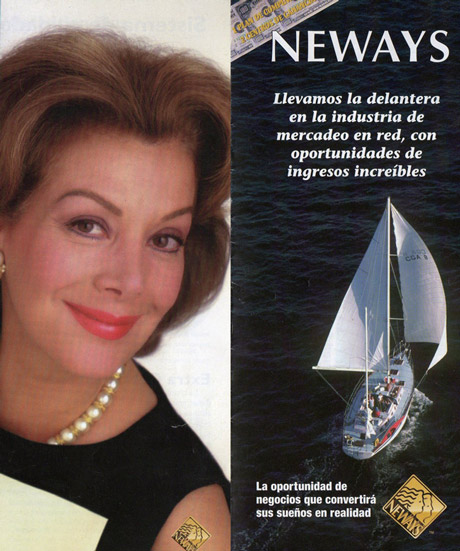
After her definitive retirement from television and radio in 1994, Virginia Vallejo received an offer to open and head the South American operation of Neways International, a multi-level marketing company based in Springville, Utah, USA, with the code #1 for Colombia and South America. Between 1996 and 1998, she built a network of 22,500 independent distributors or sales agents, and was the first Colombian to achieve the Diamond rank in the industry in her country. During the 1998 Neways world convention at Opryland in Nashville, Tennessee, she received Neways’ highest award, the President’s Cup, among nearly one million agents from 38 countries. However, a few months later, the owners—Thomas and Dee Mower—terminated Virginia’s contract and confiscated her network, giving it to one of their sons.
Testimony against Santofimio
 In July 2006, Virginia Vallejo offered her testimony to the Attorney General’s office in the trial against former minister, former senator, and former presidential candidate Alberto Santofimio, who was accused of masterminding the assassination of presidential candidate Luis Carlos Galán. The crime had been committed on August 18, 1989, by 18 hitmen from the Medellín cartel, all of whom were killed in the following months. The case was expected to last six months, but the judge and the Attorney General’s office closed the proceedings immediately.
He arrives in Miami on a DEA plane.
Immediately, Virginia Vallejo requested protection from the United States embassy in Bogotá in exchange for her cooperation in the cases of USA v. Mower and USA v. Rodríguez-Orejuela (Gilberto and Miguel, heads of the Cali cartel). The journalist had worked in 1984 as international editor for the Colombian Radio Group, owned by the Rodríguez Orejuela family and directed by former Foreign Minister Carlos Lemos Simmonds.
On July 18, 2006, a United States government plane flew Virginia Vallejo out of Colombia “for security reasons,” according to a statement from the U.S. embassy in Bogotá. Six weeks later, the Rodríguez brothers pleaded guilty without going to trial, and the Department of Justice seized their fortune of US$2.1 billion, which had been frozen until then and was subsequently divided equally between the United States and Colombia.
Loving Pablo, hating Escobar
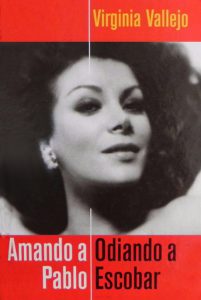 In September 2007, Random House Mondadori published “Loving Pablo, Hating Escobar,” Virginia Vallejo’s first book. In it, the journalist describes her romantic relationship with Pablo Escobar from 1982 to 1987, and the connections between drug trafficking and the Colombian political class, Caribbean governments, and rebel and paramilitary groups. One chapter is dedicated to the assassination of Minister Lara Bonilla in 1984, another to the siege of the Palace of Justice in 1985, and another to the origin of the war between the Medellín and Cali cartels. In the final section, the author describes the horrors of the narcoterrorism that followed her definitive separation from Pablo Escobar in 1987; the assassination of Luis Carlos Galán and three other presidential candidates; the kidnapping and murder of several journalists; the relationship of presidents López, Samper, Uribe, and Santos—or their families—with members of the cartels; and the manhunt and death of her former lover on December 2, 1993.
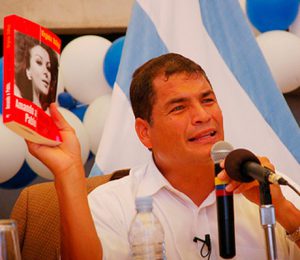
The book’s publication caused a sensation. It was discussed by media outlets worldwide and by the presidents of Colombia, Venezuela, and Ecuador, the U.S. State Department, human rights organizations, and the FARC command. In the United States, it became the #1 bestseller in Spanish for two years; and in Colombia and Latin America, it topped the sales charts before the Andean market was overrun by piracy, instigated by the media outlets of former president Alfonso López and the Santos family.
Testimony in “Cases of the Century”
Justice Palace Takeover Case
On July 11, 2008, Virginia Vallejo was summoned to testify before the Attorney General’s Office of Colombia in the reopened case of the Palace of Justice siege, carried out by the M-19 insurgent group on November 6 and 7, 1985. The purpose of the hearing was to confirm and elaborate on the events described in her book. The author confirmed that Pablo Escobar had financed the attack and refuted the claims made by one of the drug lord’s hitmen, alias Popeye, who asserted that he had paid seven million dollars to two guerrilla commanders a month before the siege. (By that time, both commanders were dead, one of them since 1983.) Virginia accused the army and security forces of the massacre, the murder of the Supreme Court justices, and the forced disappearance of those detained after the attack.
Luis Carlos Galán Assassination Case
In July 2009, the Attorney General’s Office ordered Virginia Vallejo to testify in the reopened case. The murder had been committed on August 19, 1989, by 18 hitmen from the Medellín cartel who were carrying military intelligence identification cards. By that time, the drug lord had become a terrorist. Virginia hadn’t seen him in two years, was living in Germany, cooperating with the BKA (Bundeskriminalamt, or Interpol Wiesbaden), which was passing the information to the FBI’s anti-drug division in Mexico, and was engaged to a European businessman.
In the presence of the public prosecutor’s representative, the Attorney General’s Office asked the author to elaborate on what she had already said in Loving Pablo, Hating Escobar and to describe the relationship between state security agencies and the army with the drug cartels and the founders of the paramilitary death squads. Once again, the confidential testimony was leaked by the Attorney General of Colombia, Guillermo Mendoza, to the defendants themselves and to the media.
On May 14, 2010, Virginia Vallejo filed a request for an investigation into the prosecutors involved in the Palace of Justice and Luis Carlos Galán murder cases, as well as the Colombian consulate in Miami, regarding the leaking of her testimonies to the media, the murder of several witnesses in the case, and the death threats she received from those she had denounced; however, Attorney General Alejandro Ordóñez ignored the request.
In an interview with Caracol Radio on October 22, 2007, the acting Attorney General, Guillermo Mendoza Diago, had stated verbatim that “the individuals denounced by Virginia Vallejo were untouchable, and that while the journalist had no criminal record or investigations against her, she also had no rights within the Colombian judicial system.”
Politican Asylum in the United States
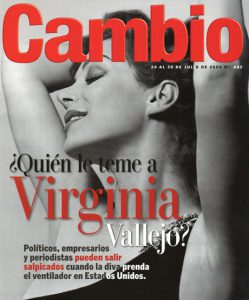
Based on all of the above, including the assassination attempt against her on her way to the Colombian consulate in Miami to testify in genocide cases in 2009; her professional career as a journalist and author; the relentless persecution she suffered as a result of her denunciations of presidential corruption; and the impunity of the army in the case of the so-called “false positives” during the administration of Álvaro Uribe and his defense minister Juan Manuel Santos, Virginia Vallejo was granted political asylum in the United States of America on June 3, 2010. The documentary evidence in the case consisted of hundreds of pages, detailing the atrocities described in the book Loving Pablo, Hating Escobar, and the thousands of threats sent to the author through various means, or posted online on media outlets owned by presidential families or Colombian billionaires.
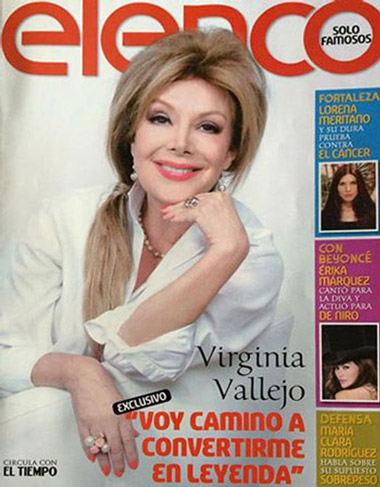
Virginia Vallejo had requested political asylum in the United States two weeks after her arrival in Miami on a DEA plane on July 18, 2006. The final hearing in immigration court took place on June 3, 2010, and lasted four hours. At the end, and for 75 minutes, the Honorable Liliana Torreh-Bayouth enumerated nearly 100 reasons for granting her political asylum under the precepts of the United States Constitution, the Geneva Convention against Torture, and the Universal Declaration of Human Rights. The judge closed the case with the following words: “The atrocities described by the Colombian journalist, and the appalling persecution against an author for writing a successful book about political corruption—all supported by hundreds of pages of evidence—are unprecedented in the 15-year history of this court.”
Convictions for those accused
Six days later, on June 9, 2010, Colonel (ret.) Alfonso Plazas Vega was sentenced to 30 years in prison for the disappearance of detainees from the Palace of Justice in November 1985. President Álvaro Uribe attacked the verdict on television and announced the army’s retaliation against “corrupt judges.” The following week, an international human rights organization had to evacuate the judge who sentenced him—the Honorable María Stella Jara—and her four-year-old son from Colombia to save their lives. On April 29, 2011, General (ret.) Jesús Armando Arias Cabrales was sentenced to 35 years in prison for the disappearance of five people from the Palace of Justice.
On January 12, 2016, Colonel (ret.) Edilberto Sánchez Rubiano—former commander of the army’s B-2 unit (military intelligence)—was sentenced to 40 years in prison for enforced disappearance.
On August 31, 2011, Alberto Santofimio Botero was sentenced to 24 years in prison as an accomplice in the murder of Luis Carlos Galán in August 1989.
On November 24, 2016, General (ret.) Miguel Maza was sentenced to 30 years in prison for complicity with the mafia in the murder of Luis Carlos Galán. The ruling was upheld by the Supreme Court of Justice on May 12, 2017.
We, the defenseless
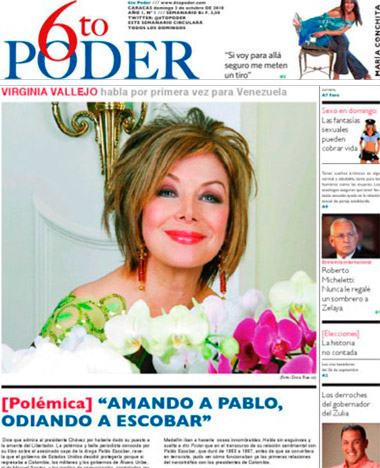 In 2010, Virginia Vallejo became a columnist for Sexto Poder, a Venezuelan opposition weekly newspaper directed by journalist Leocenis García, who was imprisoned several times by the governments of Hugo Chávez and Nicolás Maduro. The journalist titled her column “We, the Defenseless,” in homage to the five million people displaced by the Colombian genocide, and to the thousands of political prisoners, disappeared persons, murdered victims, torture survivors, and those persecuted by those in power in Colombia and Venezuela.En 2010, Virginia Vallejo se convirtió en columnista de Sexto Poder, semanario venezolano de oposición dirigido por el periodista Leocenis García, encarcelado varias veces por los gobiernos de Hugo Chávez y Nicolás Maduro. La periodista tituló su columna como Nosotros, los inermes, en homenaje a los cinco millones de desplazados por el genocidio colombiano, y a los miles de presos políticos, desaparecidos, asesinados, torturados y perseguidos por quienes detentan el poder en Colombia y Venezuela.
Her story to Hollywood
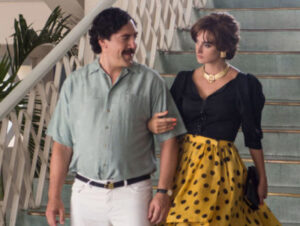

On September 6, 2017, during the Venice Film Festival, actors Javier Bardem and Penélope Cruz premiered their film Loving Pablo, based on the book by Virginia Vallejo.
Loving Pablo, Hating Escobar (2007) has been translated into 15 languages, including English under the title Loving Pablo, Hating Escobar. It was released in North America on May 29, 2018. Península (Planeta) and Vintage/Knopf Doubleday (Penguin Random House) re-released it in Spanish for the markets of Spain, Latin America, and the United States. The European editions were released throughout 2017 and early 2018.
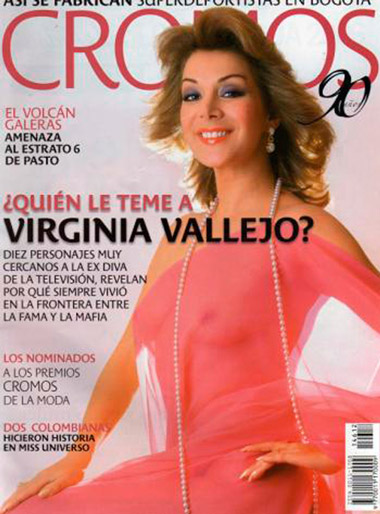
Virginia Vallejo has been featured on the covers of dozens of national and international magazines, and her career, work, and denunciations of corruption have been covered in media outlets worldwide, thousands of websites, and interviews. She continues to live near Miami, Florida, in the United States, as a political asylum seeker.
Her return to TV in 2019
In 2019, the Russian international channel RT en Español hired Virginia Vallejo to host several television programs, Dreams and Nightmares, about the so-called “American Dream” of immigrants to the United States. The specials also cover other topics that affect millions of people, such as discrimination, addiction, and the staggering poverty in the world’s most powerful country.
Her new book, 2025
The Amazing Golden Country

“The Amazing Golden Country” is the first novel in the “Candelaria Trilogy,” the saga of a powerful family in an imagined country, my own “Macondo,” inspired by recent Colombian history and personal experiences. It tells the love story of Pedro Montero Trescasitas, founder of the Green Party and presidential candidate, and Isabelle De Luna, the most famous television star in their country, both possessing exceptional beauty and popularity. The narrative features the nepotism of the political elite controlling Candelaria’s resources and their discrimination against mixed-race minorities, Pedro’s fight against the military dictatorship, and the assassination attempt on his life. The lovers’ lives take an unexpected turn, a true mystery that lasts twenty years and is only resolved in the third and final part of the story. For ease of reading, I have divided it into 31 chapters, each with a different title. It was released on May 1, 2025, and is sold exclusively on Amazon Books.


